
What’s the Difference Between a Prop Account and High Leverage on an Exchange?
Using a 99U 10,000U 2-Step account as an example, let’s compare the room for error under high-leverage exchange trading versus Prop account rules.
Both are based on:
BTCUSDT Long
Entry Price: 76,000U
Position Size: 50,000U
But the two approaches work differently:
| Comparison | Account Setup | Leverage | Risk Trigger |
|---|---|---|---|
| Exchange Futures | Open with around 500U margin | 150X | Position is liquidated when the liquidation price is reached |
| BitFrog 2-Step | Pay 99U to access a 10,000U challenge account | 5X | Challenge fails when the 5% daily loss limit is reached |
Let’s look at the result first
| Comparison | Leverage | BTC Price at Risk Trigger | Price Drop Room | Trigger Result | Loss Boundary |
|---|---|---|---|---|---|
| Exchange Futures | 150X | 75,541.12U | Approx. 458.88U | Position liquidated | Approx. 500U margin |
| 2-Step | 5X | 75,240U | Approx. 760U | 5% daily loss limit triggered, challenge failed | 99U entry fee |
Key Point:
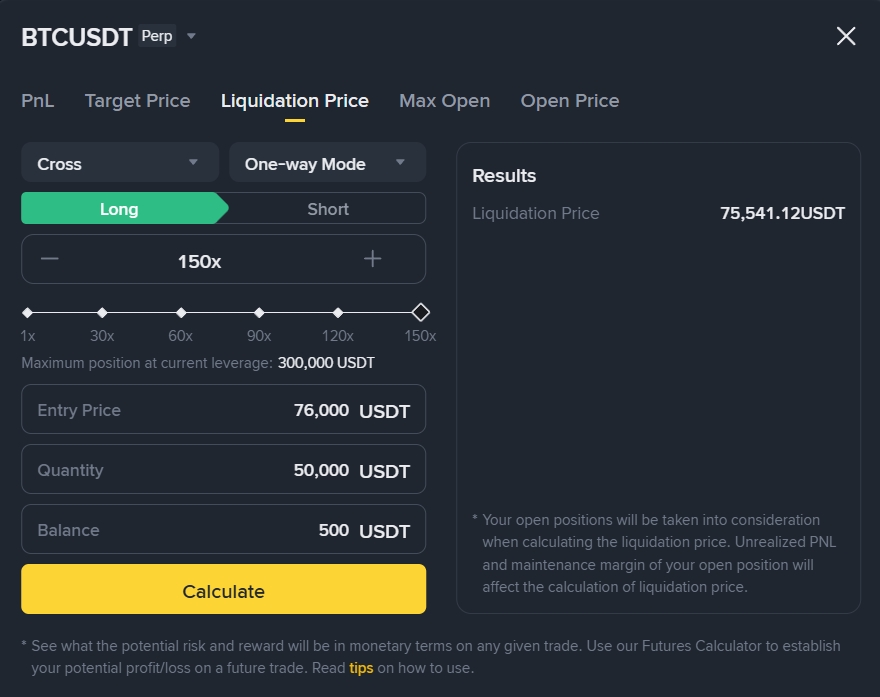
150x Exchange Leverage: BTC can trigger liquidation after falling from 76,000U to 75,541.12U — a drop of only around 0.60%.
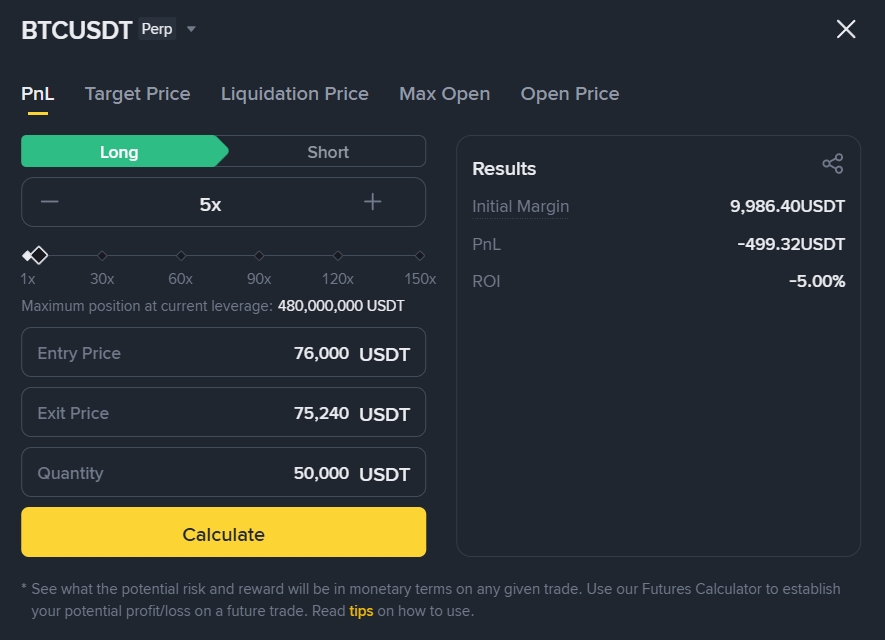
5x 2-Step: BTC needs to fall from 76,000U to 75,240U — around a 1% drop — to trigger the 5% daily loss limit.
Why Is 2-Step 5x?
The 99U 2-Step plan comes with a 10,000U challenge account.
Opening a 50,000U BTC position on a 10,000U account means the effective leverage is:
50,000 ÷ 10,000 = 5x
So this is not 150x leverage. It’s a 5x position based on the 2-Step account size.
Why Is Exchange Leverage 150x?
On an exchange, opening the same 50,000U BTC position with around 500U margin means the leverage is:
50,000 ÷ 500 = 100x+
In the calculator example shown in the screenshot, 150x leverage is used, with an entry price of 76,000U and a liquidation price of around:
75,541.12U
In other words, with high leverage on an exchange, the liquidation price is much closer to the entry price, so even a small price move can trigger liquidation.
In Short
With the same 50,000U BTC long position:
150x on an exchange: Use a smaller amount of margin to open a highly leveraged position, with a liquidation price very close to the entry price.
5x in 2-Step: Trade within a 10,000U challenge account under its account rules, with risk controlled by the daily loss limit and maximum account loss.
So the point of this example is not that Prop has no risk. It’s that:
Exchange high leverage is primarily governed by the liquidation price, while 2-Step is governed by account rules. The risk triggers are different, so the amount of room for price movement is also different.